
Stewarding Potential: What This Moment Is Asking of the Church
Apr 30, 2026
Across congregations today, leaders are navigating a shared reality: familiar patterns are shifting, long-held assumptions no longer hold, and the path forward isn’t always clear.
And yet — there are signs of life.
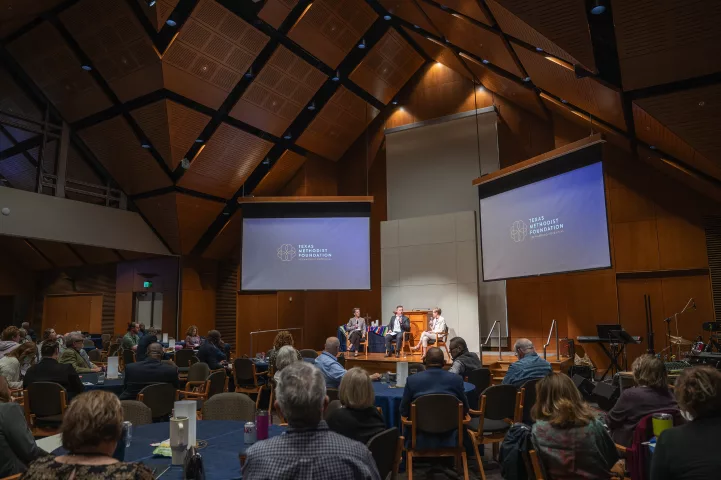
At a recent gathering of pastors and lay leaders from across Texas and New Mexico, we spent time naming both the challenges and the possibilities emerging in this moment. Three insights rose to the surface that may be helpful in your own context:
1. Formation Is Already Happening Online
People are not just communicating online — they are forming identity, meaning, and belonging there.
Every day, in digital spaces, people are asking questions, telling stories, seeking connection, and making sense of their lives. Formation is happening — whether the church is present or not.
The question is no longer whether your congregation has an online presence.
It’s this: What kinds of spaces are we creating for meaning and belonging — and how are people being formed within them?
Digital space is not just a tool for sharing information.
It is a place where people are being shaped.
The opportunity — and the responsibility — is to consider:
What might it look like for the church to cultivate spaces of faithful formation where people already are?
2. Strong Congregations Practice Discernment Together
One of the most important leadership capacities today is not strategy — it’s discernment.
The ability to notice where energy is emerging, where people are responding, and where God may already be at work.
This doesn’t require more programming. It requires space to listen, reflect, and ask better questions together.
A simple place to begin:
Where do you see signs of life in your community — and where might God be inviting you to join in?
3. Following Jesus… All the Way to the Dirt
When churches talk about property, the conversation often starts with buildings, budgets, or what to do next.
But at the gathering, we were invited to begin somewhere deeper — with a question drawn from theologian Dr. Willie James Jennings:
What would it look like to follow Jesus all the way to the dirt here?
It’s a question about place. About paying attention to the land, the neighborhood, the history, and the people right around us.
It’s also a question about discipleship.
Because following Jesus doesn’t happen in the abstract — it happens in real places, with real constraints, and real decisions to make.
For some congregations, that may lead to new uses of space or deeper engagement with their community. For others, it may involve harder choices and clearer next steps.
But the invitation is the same:
To move forward faithfully — not by starting with the building, but by asking what it means to follow Jesus here.
Across all of these conversations, one thread remained clear:
The future of the church will not be shaped by quick answers, but by leaders willing to ask deeper questions, to pay attention, and to take faithful next steps.
Even in a time of uncertainty, there are signs of life.
The invitation before us is to notice them — and to follow.
Because this is the work before us now:
Not simply managing what is, but stewarding the potential of what God is bringing to life.